Friday, February 24, 2012

A Legal Take on Ryan Braun


A Legal Take on Ryan Braun

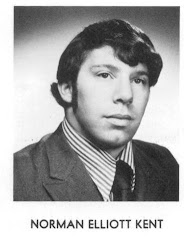
by Norm Kent

Vice President, National Organization for the Reform of Marijuana Laws

After being exonerated by major league baseball yesterday from his potential suspension, Ryan Braun owes all fantasy baseball players an apology.

In his press release acknowledging the support he had from his family and friends, he forgot to thank all those early-drafting fantasy players who stood by him and selected him in the top 20 picks. After all, as the NL MVP he was one of baseball's best players in 2011.

But now let me speak as a constitutional rights lawyer. Neither a technicality nor a loophole today freed Ryan Braun from a 50 game suspension. What saved Braun today was the fact that we leave in a society which is supposed to preserve due process, insure fairness, and honor agreements protecting the rights of employees. Baseball is no different. Players are very well paid obviously, but as Curt Flood, challenging baseball's free agency system years ago once stated, 'A high paid slave is still a slave.'

Today, baseball players are hardly slaves. Free agency has given them vast negotiating rights, but that does not change the fact that drug testing procedures in America are inherently flawed. Every day, using a substantially compromised field test, cops arrest innocent people for purportedly carrying contraband that turns out not to be so. The list and litany of false positives could and do fill a book, and I cite a few examples in a link at the bottom of the page. Beware of Dr. Bronner's natural, herbal, liquid soaps. They could put you in jail.

Nevertheless, in this era of steroids and performance enhancing drugs, major league baseball players and its management negotiated drug-testing protocols to insure the integrity of the game and trust of its fan base. However, as lawyers for the players sat down to work out the drug testing initiatives, it was imperative that mechanisms and processes be implemented that would insure the integrity of drug testing and fairness for both sides.

Scientists and lawyers had seen for years a panoply of poorly administered procedures which compromised the accuracy of results. These included a variety of situations, from not properly storing drug specimens at specific temperatures, to failing to initiate a timely testing of the sample. The reason meticulous guidelines and standards were imposed for all drug testing was because the failure to do so would render the test inherently unreliable, and could very well lead to false positives wrongly accusing an otherwise innocent individual.

The issue today with Ryan Braun is apparently chain-of-custody, but the reason chain-of-custody is critical is because the failure to preserve it exactly could potentially compromise the integrity of the test. That is why the failure to safeguard chain of custody was negotiated as a material factor in relying upon a drug test in the first place- because there is a history of insanely false positives when chain-of-custody protocols are not exactingly followed, or the specimens are not tracked thoroughly.

As the Ryan Braun case unfolds, it appears those procedures, agreed upon in writing by major league baseball and the players’ association, were not followed. He was ‘acquitted’ of wrongdoing not by a technicality. He was ‘acquitted’ of wrongdoing because of the wrongdoing by major league baseball operatives not abiding by the agreement they entered into.

This is not about a player getting off. This is about a contract being honored; about both parties being faithful to the rules and regulations they mutually negotiated before a player’s career could be interrupted and his reputation irreparably stained.

It is not that drug testing lost today. Fairness won. It is not a technicality that saved Ryan Braun. It is that we as a society have preserved due process, and the same procedures that have been used to affirm a dozen previous rulings on steroids, have now been applied to exonerate one. That is the way it should be when one side does not abide by its agreements. This time, it was the owners that lost, but neither did baseball win.

What won was the right of a censured athlete to argue an appeal and mandate that the landlords of the game respect the rights of its tenants pursuant to the terms of a lease they mutually negotiated beforehand.

For more information on how drug testing procedures in America are flawed, visit this article I published at http://jaablog.jaablaw.com/2011/08/18/field-drug-tests-fa.aspx It is hard to believe a bar of chocolate or some herbal incense can put you in jail, but in our Amerika, it still can.

As for Norm Kent, the fantasy baseball player, I should have known better. I should have had more faith in my own words, and drafted Ryan Braun in the freaking first round. My bad.

Sunday, January 8, 2012

A Felon for Life


By Norm Kent

I was trying to think of the most common questions I am routinely asked as a criminal defense lawyer- other than the predominant one, “How can you defend a guilty person?”. I will answer that on another day.

What's right behind that one? The most recurring inquiry for a lawyer representing someone charged with a crime, is if you can win your client a “withheld adjudification.” And everyone wants to know just what that means. Of course everyone wants to be acquitted or have their cases dismissed. But if the odds of that are unlikely, you want to know what is the next best alternative.

Well, first of all, there is no such thing and no such word as “adjudification.” I don’t know how the common occurrence of misstating the word came about, but a court may do one of two things with the disposition of your case- it can adjudicate you guilty, or withhold adjudication of guilt. An adjudication means you have been found guilty and are stuck forever with that finding, in this lifetime and the next. It means you have a permanent criminal record, which can never be sealed or expunged, removed or eliminated, absent a legislative change or pardon from the Governor.

An adjudication of guilt on a felony strips you of a breadth of your rights as a citizen, not only your right to vote but to hold a variety of public service jobs, as well as professional licenses. It takes away your driver’s license for two years, and it impacts your right to collect government benefits. Thus, if you are entering a plea to a criminal charge anytime anywhere, you want to seek a withheld adjudication of guilt, whether it is for a misdemeanor or felony.

In Florida and elsewhere, that is becoming more and more difficult. For example, if you enter a plea to drunk driving, courts have no discretion. It is mandatory that they adjudicate you guilty. Fortunately, that is not a felony, so some of your rights are preserved. But more and more criminal acts are coming under the penumbra of mandatory adjudications, the most frustrating of which are battery cases against law enforcement officers.

Very often, the battery charges evolve out of barroom brawls in which intoxicated patrons do not even know what is going on at the time. Sometimes a good Samaritan attempting to render aid to a police officer is seen by an arriving officer as possibly assaulting their fellow officer. They are then suddenly struggling with one officer while trying to help the other. In the melee that follows, they wind up in jail too. In other instances, of course, people, good people sometimes do get drunk, and then they act badly. There are no second chances.

Even though it is only the least serious felony, a third degree, if you strike a cop carelessly in a moment of anger or intoxication, you are likely to become branded a felon for life. In addition, more and more legislators are now talking about expanding the concept of mandatory adjudications to many other offenses. Florida, for example, now includes fleeing from a police officer as one of those offenses. Heaven help you if you do not hear those sirens.

A misdemeanor is less serious than a felony. In fact, the word ‘misdemeanor’ is derived from the Latin phrase for ‘misbehavior.’ Unfortunately though, if you are ever adjudicated guilty, even of only a misdemeanor, you will never, under Florida law, ever be able to get your record expunged. And if the adjudication is for a sexual offense, you can be barred from working in nursing homes, schools, and a variety of venues. Those that plea out may be having deal with those pleas for the rest of their life, as these cases generally can never be expunged or sealed. An expunction erases a criminal charge from your ‘record.’

Two years ago, I handled a case for a drag queen, Tiny Tina, who had been adjudicated for engaging in a lewd act in 1976, when she hosted a wet jockey contest at the Copa Bar. In the year 2010, she was denied a job at an assisted living facility when a state records search revealed that 34-year-old finding of guilt. Fortunately, I eventually had that horrible ruling overturned.

Indeed, it is getting tougher to seal or expunge any record of your arrest for misdemeanors or felonies. For example, charges that are now disqualifying, and make you ineligible for an expunction, include sexual offenses, acts of domestic violence, battery, residential burglaries, stalking and fleeing police. State law allows you only one expunction ever, and only if you have never been ‘adjudicated.’

When the term ‘adjudication’ is used in traffic court, the meaning is drastically different. You see, traffic tickets are considered only ‘civil infractions.’ Therefore, if you are found guilty and ‘adjudicated,’ it simply means that you are getting points assessed against your driver’s license by the Department of Motor Vehicles. It does not mean that you have been found guilty of a crime. If that is the worst thing that ever happens to you, then you will have lived a very decent life.

Many people come to Florida on vacation and wind up on probation. Many come from urban populations where certain behaviors are threated more leniently and liberally. In Dade County, however, the average traffic ticket will cost you about $250. In Broward, if you commit a felony, you are more likely to go to jail than almost any county in the state. Sell just one ounce of marijuana to an undercover police officer and our state attorney’s office will make you a plea offer of no less than 18 months in Florida state prison.

Ultimately, these harsh laws present grave consequences to the average citizen who makes one costly mistake. It means that a momentary lapse today can mean a lifetime of explaining it away tomorrow. What it means is your record and your life can become subject to permanent public scrutiny, accessible to anyone- friends, enemies, lovers, creditors, employers, credit agencies, and anyone with a computer that has Internet access.

We live in a country where one out of every 100 adults is either in prison or under some form of judicial probation or supervision. For Hispanics and African Americans, those statistics are even more dramatic. Too many acts have been declared illegal, and too much government has restrained our liberties. Florida is one of those places. Keep it in mind the next time you go off to party. The sun tans as well as burns.

Monday, November 7, 2011

Reefer Madness


By ETHAN NADELMANN

MARIJUANA is now legal under state law for medical purposes in 16 states and the District of Columbia, encompassing nearly one-third of the American population. More than 1,000 dispensaries provide medical marijuana; many are well regulated by state and local law and pay substantial taxes. But though more than 70 percent of Americans support legalizing medical marijuana, any use of marijuana remains illegal under federal law.

When he ran for president, Barack Obama defended the medical use of marijuana and said that he would not use Justice Department resources to override state laws on the issue. He appeared to make good on this commitment in October 2009, when the Justice Department directed federal prosecutors not to focus their efforts on “individuals whose actions are in clear and unambiguous compliance with existing state laws providing for the medical use of marijuana.”

But over the past year, federal authorities appear to have done everything in their power to undermine state and local regulation of medical marijuana and to create uncertainty, fear and confusion among those in the industry. The president needs to reassert himself to ensure that his original policy is implemented.

The Treasury Department has forced banks to close accounts of medical marijuana businesses operating legally under state law. The Internal Revenue Service has required dispensary owners to pay punitive taxes required of no other businesses. The Bureau of Alcohol, Tobacco, Firearms and Explosives recently ruled that state-sanctioned medical marijuana patients can not purchase firearms.

United States attorneys have also sent letters to local officials, coinciding with the adoption or implementation of state medical marijuana regulatory legislation, stressing their authority to prosecute all marijuana offenses. Prosecutors have threatened to seize the property of landlords and put them behind bars for renting to marijuana dispensaries. The United States attorney in San Diego, Laura E. Duffy, has promised to start targeting media outlets that run dispensaries’ ads.

President Obama has not publicly announced a shift in his views on medical marijuana, but his administration seems to be declaring one by fiat. The head of the Drug Enforcement Administration, Michele M. Leonhart, a Bush appointee re-nominated by Mr. Obama, has exercised her discretionary authority to retain marijuana’s classification as a Schedule I drug with “no currently accepted medical use in treatment in the United States.” And the pronouncements on marijuana, medical and otherwise, from Mr. Obama’s top drug policy adviser, R. Gil Kerlikowske, have been indistinguishable from those of Mr. Bush’s.

None of this makes any sense in terms of public safety, health or fiscal policy. Apart from its value to patients, medical marijuana plays an increasingly important role in local economies, transforming previously illegal jobs into legal ones and creating many new jobs as well, contributing to local tax bases and stimulating new economic activity. Federal crackdowns will not stop the trade in marijuana; they will only push it back underground and hurt those patients least able to navigate illicit markets.

Perhaps not since the civil rights era has law enforcement played such an aggressive role in what is essentially a cultural and political struggle. But this time the federal government is playing the bully, riding roughshod over states’ rights, not to protect vulnerable individuals but to harm them.

At the federal level, there have been few voices of protest. Senior Democrats on Capitol Hill shy away from speaking out. Republicans mostly ignore the extent to which anti-marijuana zealotry threatens core conservative values like states rights, property rights and gun ownership.

Mr. Obama briefly showed a willingness to challenge the drug-war mind-set that permeates the federal drug-control establishment. He needs to show leadership and intervene now, to encourage and defend responsible state and local regulation of medical marijuana.

Ethan Nadelmann is the executive director of the Drug Policy Alliance.

Monday, October 10, 2011

Obama Betrays Promise as Feds Crackdown on California Dispensaries


Betrayed by Barack

By Norm Kent

In a complete betrayal of his campaign promises and inaugural initiatives, federal prosecutors in the Obama Administration last Friday launched a crackdown on medical cannabis dispensaries in California. Welcome to the new world.

The ‘Shock and Awe’ campaign includes a warning that the targeted shops must shut down and cease operating within 45 days or face criminal confiscation of their property- even if they are operating legally under the state's 15-year-old medical marijuana law.

Like the government once did with pornographic video shops, the tenant is not the only party targeted. Landlords are simultaneously admonished that their leases violate federal regulatory guidelines, and they are complicit in the criminal enterprise. They are advised that they must terminate the lease and take steps to evict the tenants, or the government will seize their entire shopping centers for acquiring illegal assets as the fruits of a criminal enterprise.

Some of the letters prosecutors sent out also warned the state and city-licensed dispensaries of enhanced federal penalties if their businesses happened to be within a thousand feet of schools or playgrounds.

Four US Attorneys gathered on Black Friday in Sacramento to announce the ultimatums delivered to at least 38 dispensaries throughout the state. Declaring that federal law “took precedence over state law and applies regardless of the particular uses for which a dispensary is selling and distributing marijuana," they told the proprietors they just don’t give a damn what laws California has enacted and whether their dispensaries are in compliance with local municipal ordinances or not.

“We are the kings,” they said, and you shall do our bidding or ‘go directly to jail.’ Do not pass Go. Do not collect $200. To them, it was a game, and they were the game makers.

The US Attorneys, wearing suits invisibly emblazoned with a hammer and sickle, announced that any dispensary that remained open “would be subject to criminal prosecution and civil enforcement actions,” including the seizure of real and personal property. No discussion. No debate. Just jail and seizures, fines and forfeiture.

The position is a 180-degree reversal from the Obama Administration’s optimistic and inaugural promises implying that those dispensaries, which were in compliance with state law, could operate without fear of federal intrusion. You could almost see it coming.

The new road follows the appointment of a drug czar who was not sympathetic to dispensaries. It follows months of threats and warnings from local federales. And it follows months of IRS audits and bank actions refusing dispensary accounts.

The Obama Administration’s false promises were a misleading ruse, lulling supporters to expand and enhance dispensaries throughout California. This law enforcement initiative reflects that Obama was either never supportive of medical marijuana efforts or is transparently powerless to supervise the very US attorneys he has appointed.

Either way, this new legal initiative will send a message not only to the sixteen states that have enacted medical marijuana laws. It will intimidate and warn others not to even try. Threatened municipal officials will see what is happening in California and back off everywhere else. Prohibition has returned, in a big, federal way. Thanks, Mr. President.

To his credit, Rob Kampia, Executive Director of the Marijuana Policy Project, was one of the first persons to condemn the administration. He published a column in the Huffington Post entitled: “Obama- From First to Worst on Medical Marijuana.”

In March 2008 Gary Nelson, editorial page editor at southern Oregon's Mail Tribune, interviewed Sen. Barack Obama (D-Ill.), who at the time was running for the Democratic presidential nomination. When Nelson asked Obama about federal policy regarding Oregon's medical marijuana law, which had been approved by voters a decade before, Obama declared, "I'm not going to be using Justice Department resources to try to circumvent state laws on this issue." Oh, really?

Two months later Obama added that he would stop the DEA’s raids on growers since “our federal agents have better things to do, like catching criminals and preventing terrorism." As columnist Jacob Sullum wrote yesterday, Oregon medical marijuana growers who were raided by the DEA last weekend probably are wishing that guy had been elected president.

As for those enterprises which legitimately invested their life savings in starting a ‘cannabiziness’ which complied with local and state regulations, and offered a public service to those who found marijuana had legitimate medical uses, well they are just damn well out of luck. Who ever said the government was going to be fair? Who ever believed the government could not be ruthless?

"We are currently zoned correctly, we are in a discrete location not near any schools," said Chris Morganella, who is on the board of directors for Capitola Healing Association in Santa Cruz. "I cross my fingers and hope our landlord doesn't get that letter, because then he'll want to break the lease. But I signed a five-year lease, and that will have to play out in court too." It does not matter what you signed Chris. You are playing Lotto with your freedom. Tomorrow could come, and tag, you are it.

The government says they are targeting the larger establishments, which meet ‘threshold’ requirements. They say they want to arrest international traffickers as opposed to lower-level workers, but you can’t trust anything they say. They say they want to speak with one voice and maintain a statewide ‘measurable standard’, which inhibits commercial distribution and drug trafficking for profit. They think their motives are noble but their measures are only going to scare off the sickest of the sick and the neediest of the needy. The smallest businesses are hurt by their effort.

The limousine and laptop liberals who come out and defend the US attorneys will say that these were not medical establishments anyway, just veils for illegal distribution centers. The truth is all distribution should be legal anyway.

The truth is that in ballot after ballot and state after state the citizens of America, from students in colleges to baby boomers wondering where their 401k’s went, are thoughtfully voting to reform marijuana laws. We just have an intransigent federal government, ineptly governed by misguided law enforcement officials, who can’t or won’t hear the voice of the people singing- or smoking, as the case may be. We are the cast of Le Mis, and our voice is of angry men who have to rise and rise again. Just pass the vaporizer in the meantime.

As the dispensaries close under the threat of enforcement action, the growers and cultivators will go underground again. The buyers and dealers will go back to the streets. But Marijuana, Pot, Cannabis, and Weed will not go away.

What will go away is the potential revenue stream lawful distribution could have generated, the public safety regulation would have brought, and the access medical patients so desperately need.

Marijuana prohibition as a policy has failed, and our government, led by a man who has openly admitted smoking marijuana in his past, has betrayed us once again. Maybe a million-man marijuana march on the White House is what we need next. Occupy That.

A Florida attorney who can be reached at norm@normkent.com, Norm Kent serves on the NORML Board of Directors.

Wednesday, August 10, 2011

A miscarriage of justice on marijuana

    Marijuana plant

    FROM THE UK GUARDIAN....

    US police are using a flawed scientific test in drugs busts that gives 'false positives' to strongarm citizens into plea bargaining


    The Duquenois-Levine test, widely used by police in the US, can detect marijuana, but also gives 'positive' results for numerous other commonly occurring substances. Photograph: Linda Lewis/Getty Images

    As if America's highly-publicised "war on drugs" were not already facing a credibility gap, two US superior court judges – one in Washington, DC, another in Colorado – are raising questions about whether the federal Drug Enforcement Agency (DEA) and police departments are using "pseudo-scientific" drug identification methods to bust hundreds of thousands of suspected drug users, many of them inner-city minority kids. A flawed drug test means that innocent people are being locked up as suspects, deprived of their due process rights, and then pressured to accept plea bargains, whether they're guilty or not.

    At issue in the growing controversy is whether current drug identification methods, including the widely-used "Duquenois-Levine test", can verify – and how accurately – that the substance police seize during an arrest is the one they say it is. The test, a variation on simple techniques first employed in the 1930s, exposes the suspect substance to a liquid chemical, and if it turns a certain colour – purple, in the case of marijuana – it's deemed likely to be the real thing.

    But according to leading defence experts, including Heather Harris, a highly-trained chemist who's gone head-to-head with DEA lab "experts" and won, there are hundreds of legal substances, many of them readily available commercially, or in nature, that would normally turn purple under the exact same test conditions. Which means the Duquenois test, while ruling marijuana "in" as one theoretical possibility, perhaps, can't confirm its presence, either – at least, not "beyond a reasonable doubt", the legal threshold required for a conviction.

    But that hasn't stopped police from using the test widely. In one recent case in Florida, police descended on a middle-aged woman bird-watcher in a public park and busted her after noticing a leafy substance in a package in her purse, which later turned out to be sage she'd purchased as incense for her home. The woman tried to inform the police about sage's medicinal and spiritual uses, and even Googled the manufacturer's website on her laptop, which matched the branding on the package. But the police busted her anyway, after the substance turned purple in a lab test. She's now planning to sue for damages.

    In fact, the problem of "false positives" in drug tests isn't just limited to substances that appear to resemble marijuana. In Canada, the owners of a family-based chocolatier business were fingered as dangerous drug dealers by a Duquenois field test, and found themselves in jail.

    The chocolate case may seem extreme but it's happening all across America, experts say. That's, in part, because of the pay incentives involved. Police can earn large amounts of overtime pay by conducting routine drug busts, especially after hours; they even have a name for the practice: "collars for dollars". In New York, where possession of less than an ounce of marijuana was decriminalised some years ago, marijuana drug busts have not declined; they've skyrocketed – from 5,000 to roughly 30,000 annually – in part, because police find the practice so lucrative.

    Of course, Duquenois-Levine is not the only DEA-approved drug test available. A far more conclusive test, known as GC/MS, using far more advanced techniques, can also be performed, but defendants and even many lawyers are rarely aware that they can insist on such a test, or have much incentive to do so.

    And, in fact, even the GC/MS test is increasingly under fire, because the DEA doesn't have standard lab protocols to govern its use, and has angered judges, including those in Washington and Colorado, by overstating the test's reliability in court. In one recent case, a Colorado superior court judge threw out all of the DEA's testimony in a drug case after its witness, under cross-examination, failed to demonstrate that the GC/MS testing conducted at one of its 18 national labs was reliable. It's a legal precedent that has the DEA reeling, experts say.

    Of course, many people arrested for drug use and possession are undoubtedly guilty as charged – how many is unclear, though, because plea bargaining is so commonplace. But using manifestly flawed drug identification tests to charge defendants, or pressure them to plead guilty, is hard to square with a defendant's right to due process. And the DEA and local police, by relying on such methods, are in danger of damaging even their "good" cases, making a further mockery of the "war on drugs", while leaving ordinary citizens more at risk than ever.


Monday, December 13, 2010

You Are Right to Remain Silent: Just Shut Up


You Are Right to Remain Silent:
Just Shut Up
A Criminal Defense Lawyer’s Advice to Tokers


By Norm Kent
NORML Board of Directors


After 35 years of practicing law in the trenches of state and federal courts, I have narrowed my advice for all my clients down to one, simple, direct sentence: “Shut Up.”

No kidding. Really. Just shut up.

Living in Florida, I have come to love deep-sea fishing. Enter my law office, and on my walls, above my desk, staring and glaring at my clients, is a stuffed, six-foot steel blue Marlin. Below the fish is a plaque that reads: “Behold the beautiful, majestic Marlin. He would not be here if he had not opened his mouth.”

When you are a 7-year-old kid growing up, and your mom catches you with your hand in the cookie jar, you inevitably and sheepishly try to come with an excuse. Mom pushes and prods you to confess, and you do. She then hugs and kisses you, and you make up as she tells you everything is going to be all right.

It does not work that way with a cop when he pulls you over. The police are not your parents. The sheepish lie you first tell him becomes a prior inconsistent statement that is going to be used in a court of law against you. The cop does not hug you, kiss you, and make up. He searches you, arrests you, and locks you up. So what you should do is just shut up.

Do not bargain with cops, negotiate with cops, or promise deals you cannot deliver on. The promises they make on the street are not binding in the courts where prosecutors charge you. Deal with the reality that if you are caught with drugs you are now the prisoner of a drug war. In war, you are only required as a prisoner to give your name, rank, and dog tag number. Do not give consent to search your car, your person, or invite cops back to your home. Do a Nancy Reagan: just say no.

As my friend William Panzer says, an Oakland, California based criminal defense attorney, also on the NORML Board of Directors, "If everyone kept their mouth shut, half the people in jail would not be there. The cop’s job is to put you in a cage and anything you say beyond identifying yourself helps them put you there." His advice too: "Shut up."

My advice is that if you are carrying drugs, prepare yourself for jail. Don't carry lots of cash that will be forfeited to the State. Instead, keep dog bones in your car. This way, when police tell you they are going to keep you sitting in handcuffs by the side of the road- in the hot sun or cold wind- while they retrieve a canine to search your vehicle, you can offer the dog some treats when he arrives. In the meantime, shut the mouth up. This is not the time to bemoan your fate in front of the officer and reflect that you were only ‘doing a favor for a friend.’ The cop will not give you a bone. He will transcribe your confession.

I would be a liar if I told you that ‘shut the mouth up’ works in every single instance. If you are carrying a loose joint in a ‘decrim’ state and you own up to a cop, he may let you go with a reprimand. But let’s face it; if you are carrying felony weight cannabis, a couple of beans, or some crystal, you are headed to jail. The US Constitution does not say your job is to make the police and prosecution’s job easier by telling them how and where you got it. The US Constitution says your right is to remain silent. Use it; don’t lose it. Just Shut Up.

You may think you are already guilty. Far from it; you are not. If the state cannot prove it, it is not a crime. It is their job to prove the case above and beyond a reasonable doubt. It is not your job to tell them all the contraband is yours so their job becomes a snap while they snap handcuffs on you. So just shut the mouth up.

Show police your driver’s license, insurance card, and registration. Show them your McDonald’s discount Big Mac card if you must. But do not be a dope and show them your dope. Abraham Lincoln once wrote that many men are foolish but that some “speak and remove all doubt.” Be one of those that leave arresting officers with doubt. You might get rewards for confessing in a church. You do not in a courtroom or on the street to a cop. Just shut up.

The most recent and recurrent law enforcement technique being employed presently is the notorious ‘knock and talk’ on your front doorstep at your home. They are ‘trick or treating’ for an admission. Armed with anonymous and non-verifiable information that you are cultivating marijuana on your premises, cops ‘drop by’ for a chat, seeking your permission for a search.

They like to make it seem they are coming over for coffee, investigating a zoning violation, or looking for a lost cat. They are not. They are looking for you to let a cat out of the bag that you are growing at home. Think of it this way: if they had enough information to believe you were doing something illegal, they would not be there asking for permission. They would have already secured a warrant and smashed in your door.

In these situations, the officers have no valid basis to even be on your property, let alone a warrant to enter. You have no legal obligation to answer their questions. You most certainly do not have to invite them in. They tell you though they ‘know’ pot is there and it will go ‘so much easier on you’ if you cash in your stash. No, it won’t. You will go to jail when you did not have to. You will have foolishly waived a right you never should have given up. So just shut up, and show them the door.

Far too many times, and for too many years, I have watched young men and women get arrested while feeling some sort of moral obligation to simultaneously say to cops: “You got me!” I think it goes back to mom and the cookie jar. But guess what? You are not Dorothy, and we are not in Kansas anymore. So just shut up, because what you do not say cannot be used against you in a court of law. What you do not say may prevent you from being there in the first place.
G-Rated Version.

Friday, November 5, 2010

Tim's Anniversary


This is the anniversary of the date World Series star and Cy Young award winner Tim Lincecum was cited for misdemeanor marijuana possession in Washington State.

Washington State Patrol reported smelling marijuana when Lincecum initially rolled down the window, and upon inquiring about the smell Lincecum produced 3.3 grams and a pipe.

I guess life went on, and we all survived. He did not do too bad either.

The 26-year old Lincecum went to Liberty High School in Renton, WA just a few miles away from where he got popped.

He remained in the Pacific Northwest when he went on to play college ball at the University of Washington, and throughout the years.

His friend blogged about his arrest last year: "He didn't go all Andre Agassi on us and end up on some crystal meth, and Lincecum was not driving under the influence at the time. He was cited for going just 14 MPH over the posted 60 MPH speed limit.

The stretch of highway that he got pulled over in is a well-known spot for speed traps, because it is located just a few miles from the Oregon border where speed limit changes about every 20 yards.

Seriously, the speed limit is ridiculous.

It goes from 45 through Portland, then to 55, and back up to 60 before it hits a cool 70 a few more miles north.

Regardless of the speeding or weed involved, Lincecum has no prior history of indiscretions and no tarnishes on his record up to this point, so can’t we just give him a break on this one?"
Tim did not win the Cy Young in 2010. He won something better, a World Series championship ring. And proof once again for all Americans that a joint here and there does not stop you from being a championship athlete.

Saturday, October 30, 2010

Marijuana Legalization Stocks

By Stockerblog.com

Friday, October 29, 2010

On Tuesday, November 2, California residents will be voting on Proposition 19, the ballot measure that, if passed, would legalize limited quantities of marijuana for recreational use. This has created plenty of fodder for news reports.

The New York Times just reported on the marijuana related domain name land grab. UPI reported that a marijuana dispensary in San Francisco would give away free joints whenever the Giants hit a home run during the World Series.


And to top it off, The Wall Street Journal posted an editorial by billionaire investor George Soros, in which he says he supports the legalization of marijuana.


Unfortunately, most of the plays on legalization involve very low cap stocks, according to the list of 20 marijuana stocks at WallStreetNewsNetwork.com.


However, for the medical use of marijuana and its derivatives, there are larger companies that produce such products as Marinol, a trademark of Solvay SA (SVYSF.PK) and Nabilone, marketed as Cesamet by Valeant Pharmaceuticals International (VRX), which trades on the New York Stock Exchange. Nabilone, a synthetic cannabinoid, is used to treat chemotherapy-induced nausea and vomiting, anorexia, and weight loss in AIDS patients.Valeant also markets Fluorouracil, a cancer treatment drug, and Diastat, a seizure drug. This $4.38 billion market cap stock trades at 30 times earnings, and pays a yield of 1.4%. Earnings for the latest reported quarter were up 41% year over year on a 23% increase in revenues. The company will have its next earnings announcement on November 4. Par Pharmaceutical Companies (PRX), a $1.14 billion market cap company markets Dronabinol, a form of Tetrahydrocannabinol or THC. However, this is a small part of the business as the company markets dozens of other drugs. The stock has a PE ratio of 13.9 and trades at one times sales. Earnings will be reported November 3. GW Pharmaceuticals (GWPRF.PK) produces Sativex, an oral spray with tetrahydrocannabinol and cannabidiol, which is used to treat multiple sclerosis patients, and also for treating pain in cancer patients. Earnings for the quarter ending March 31 were negative. The company will be reporting earnings on November 23. To see the complete free list of twenty marijuana stocks, which shows the symbol, PE ratio, price sales ratio, yield, market capitalization, and business description, go to WallStreetNewsNetwork.com. Disclosure: Author didn't own any of the above stocks at the time the article was written.

Thursday, October 28, 2010

Comedian’s Video Supports Pro Pot Legalization Drive


Miami Beach, FL (Oct 26th, 2010) Last week, comedian Steve Berke launched an online political campaign in support of Proposition 19 in California with the recent release of his latest music video, "Should Be Legalized", a political commentary on Eminem's music video "Love The Way You Lie."

The campaign, supported by NORML (National Organization for Reform of Marijuana Laws) was generating huge internet buzz, and had amassed 108,000 views within 2 days, when YouTube flagged it for being offensive, thus requiring users to login to view the video, killing the video's chance at becoming viral. "We were on pace to reach 1 million views within a week, and our video was rallying supporters of Prop 19 and decriminalization in every state that had it on the ballot. Then YouTube flagged us for being offensive and killed any chance we had at reaching our potential audience. Their censorship of this video is similar to the Internet censorship that takes place in repressive countries like North Korea and China.
"YouTube failed to give any reason to Berke for flagging the video and it is presently inaccessible to the vast majority of worldwide. “The flagging system does not have a system of recourse and re-review,” stated Berke.Fort Lauderdale attorney Norm Kent, on the Board of Directors at NORML, is among those who are outraged.
"We will not let YouTube squash a vibrant political campaign the week before the historic November 2nd elections. Videos of rapper Snoop Dogg smoking marijuana are not flagged as offensive, but a song that merely names him as a marijuana user is? YouTube is effectively freezing a viral political movement as it gains momentum in time for a critical vote. They must remove the flag. If they do not, we will pursue the matter further until they do.”
NORML Executive Director Allen St. Pierre adds, "YouTube’s building a wall around Steve Berke’s video makes no sense in light of dozens of other videos that depict normal cannabis use. YouTube, whether it means to or not, is stifling legitimate political discourse regarding an important initiative vote in California next week that seeks to legalize and tax cannabis.”"I just don't understand it," said Berke. "People smoking marijuana in videos on YouTube go unflagged, but our video, that involves actors merely pretending to smoke marijuana as political satire, is flagged immediately."
“In Eminem’s video, alcohol abuse, spousal abuse, sexual assault, arson and murder are all prevalent and the video is not censored in any way. In fact, YouTube runs ads against it, not only profiting off the video, but also making it viewable to all ages at all times,” Berke added.
The link to Eminem's "Love The Way You Lie" is http://www.youtube.com/watch?v=uelHwf8o7_U&ob=av3e
The link to Berke's "Should Be Legalized" is http://www.youtube.com/watch?v=NdIYVWA0dr0